alt.hn

5/26/2026 at 5:59:15 PM

Shakespeare’s World – I thought this would be simple but

https://knowwhereconsulting.co.uk/blog/shakespeares-world/

by speckx

5/30/2026 at 9:34:08 PM

The first thing that I did was zoomed out, surely Shakespeare wrote about something in the New World?

No. It is amazing how small his world was. He was born and grew to adulthood, in the world where Spanish dominance kept England from attempting to explore the world. While Jamestown was settled before he died, he never wrote about it.

I've updated my understanding of how (un)aware people were in this era of the larger world. I have no idea why I would have ever expected otherwise.

by btilly

5/30/2026 at 11:06:49 PM

A lot of that is bias from the fact the whole map was vibed/hallucinated by an LLM instead of just sourced from (what I'm sure are many) concordances of Shakespeare's works.

For example, "The Tempest" famously mentions the "Bermoothes" (Bermuda), but that's not included in this LLM's output for some reason. Any decent subject-index of Shakespeare would include it.

by quuxplusone

5/30/2026 at 9:42:20 PM

The map contains a bunch of references to America, the West Indies, Guiana, and Mexico. (Often with a connotation of "faraway exotic place" or "exciting new international development".)

He may not have written about the British colonies but the New World was clearly at least somewhat present in his mind and his audience's minds.

by snarkconjecture

5/30/2026 at 10:47:13 PM

The most far-flung pins on the map are further away than Shakespeare or his audience likely had in mind.

"America" looks like it's at the centroid of the modern continental USA, but Shakespeare was surely thinking of somewhere in the Caribbean. "Asia" is shown somewhere in Mongolia/Kazakhstan, but the quotes suggest Turkey or the Middle East, and Shakespeare surely would have said "Cathay" or "India" if he meant to go that far. Likewise "Russia" is shown in Siberia, but everyone in Russia lives near the European borders thousands of km west.

That said, the references to Ethiopia, India, and the Indies are very clear and can only be where they are shown on the map.

(Don't take any of this as criticism! The map is very cool, it just shows the limits of what a fully automated approach can do. A human approach would be limited by the human's biases instead.)

by dmurray

5/31/2026 at 1:20:24 AM

> Likewise "Russia" is shown in Siberia, but everyone in Russia lives near the European borders thousands of km west.

Yes, and "Love's Labour's Lost" specifically pairs/ contrasts "Russians" with "Muscovites": the "Russia" of St Petersburg is pretty far west of "Moscow."

by quuxplusone
5/31/2026 at 12:38:22 AM

I note that Dunsinane Hill isn't on the map.

You know the line "Macbeth shall never vanquished be until / Great Birnam Wood to high Dunsinane Hill / Shall come against him"? Or "I will not be afraid of death and bane, / 'til Birnam Forest come to Dunsinane."

Birnam Wood is a real place though it used to be a lot bigger, it was gradually chopped down by humans and now all that's left is the Birnam Oak, which is at least 600 years old and it's believed Shakespeare either visited it, or at least heard of it while visiting Perthshire.

Dunsinane Hill on the other hand... it is a real place, but not much to see. There's no palace or castle, just the remains of an iron age hill fort, which Macbeth probably did not use.

Dunsinane was the site of a battle between Macbeth and Siward, Earl of Northumbria in 1054, who was leading an English army to try and install (we presume) Malcolm as King of Scotland. Macbeth lost, but he wasn't killed. https://en.wikipedia.org/wiki/Battle_of_Dunsinane

Macbeth was killed by Malcolm in the Battle of Lumphanan in 1057: https://en.wikipedia.org/wiki/Battle_of_Lumphanan

Also, Macbeth didn't kill King Duncan in his sleep, he killed him in the Battle of Bothnagowan in 1040: https://en.wikipedia.org/wiki/Battle_of_Pitgaveny

by amiga386

5/30/2026 at 10:10:50 PM

This is interesting but what would be more helpful is context about what contemporary audiences would have known and thought about these places. After all, Shakespeare undoubtedly had good reasons to choose these references.

by pimlottc

5/30/2026 at 11:28:36 PM

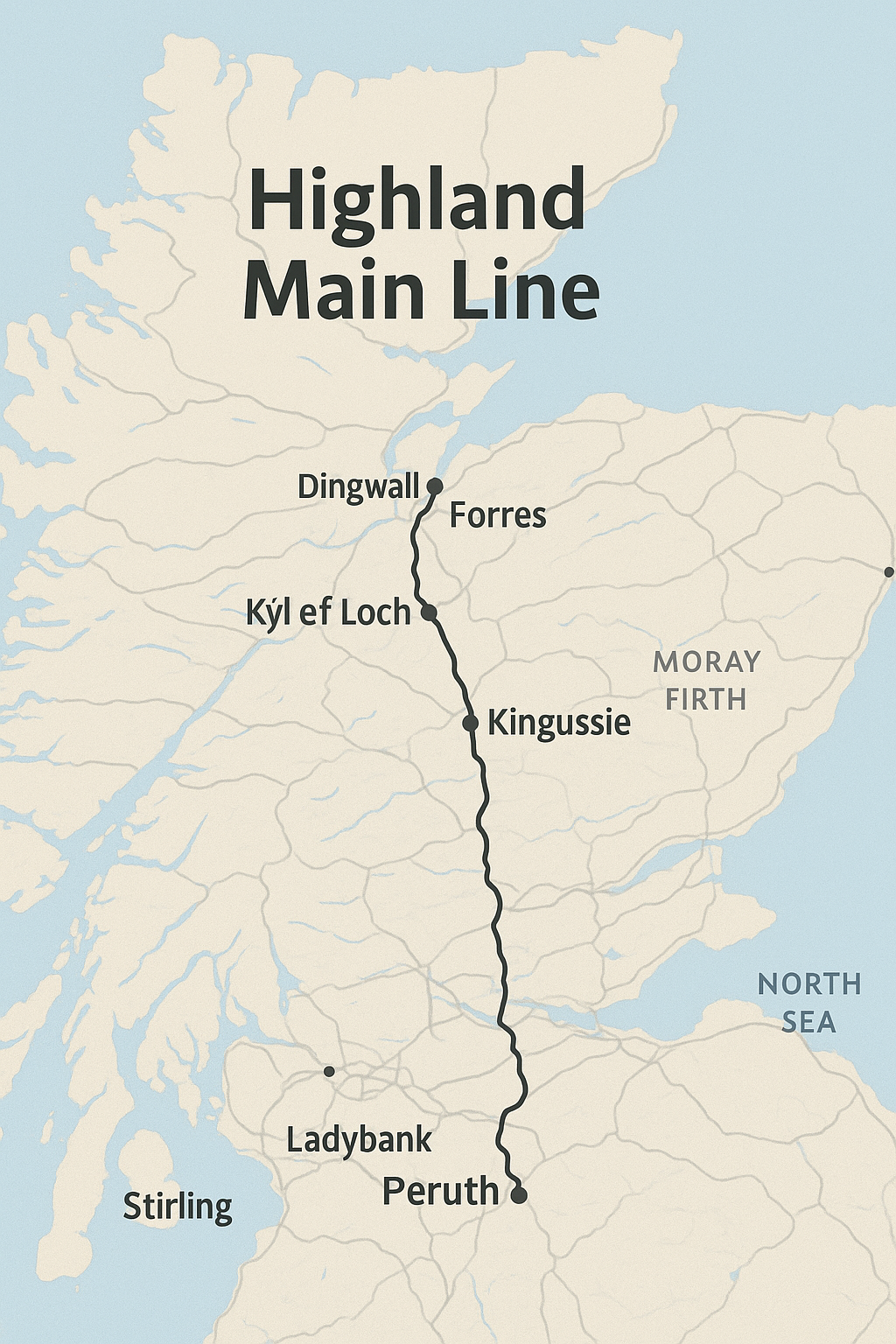
I wouldn't trust any generated map unless the human author has good knowledge themselves... and made the map themselves.

As an example, this is a map from a SEOing spammer who knows absolutely fuck all and let an LLM hallucinate the map:

https://www.scotlands-enchanting-kingdom.com/wp-content/uplo...

It is unbelievable how bad this map is. Every single thing about it is wrong. And its author doesn't give the slightest shit, because they shit out pretend websites by the dozen and never even think to look at them. All that matters is shitting up search results with this complete pile of shite and wasting other people's time.

This is a map of the same subject, but made by a competent person with real map data:

https://upload.wikimedia.org/wikipedia/commons/e/e0/Highland...

by amiga386

5/30/2026 at 9:53:46 PM

> I thought this would be simple

Rationalising global location data across several hundred years based on extracting real-world references from complex and metaphor-laden text.

Every single part of that should trigger a 'definitely complicated' warning bell.

by Planktonne