5/26/2026 at 4:44:37 AM
The reason really is the extreme arrogance of every single manufacturer that wants you to install their app and use their ecosystem. That might have worked if one of them became super dominant and pushed everyone else out. But because that didn't happen, now I have to install 20 apps for 20 different manufacturers with no guarantees of interoperability.Instead of that I'm choosing to vote with my wallet and mostly stay away until this is resolved. Skyrocketing inflation is not doing anything to change my mind either.
by quadrifoliate
5/26/2026 at 6:21:45 AM
That one was pretty obvious to everyone, open hard- and software is a must for the longevity of (internet of) things that cost < USD 1000. It's the sad reality we settled on in our weird economic system, and every once in a while someone needs to relearn it the hard way: No company is going to offer support for cheap things, so it must be done by an open (source) community.I've settled on a ZigStar Stick for my always-on Raspberry Pi and stick to compatible devices[0] only. I even just stick to the dashboard of Zigbee2MQTT[1], as Home Assistant[2] feels too bloated for my use cases.
Self-hosting and open source will certainly win in the case of smart homes.
[0]: https://www.zigbee2mqtt.io/supported-devices/
[1]: https://flemmingss.com/wp-content/uploads/2021/09/zigbee2mqt...
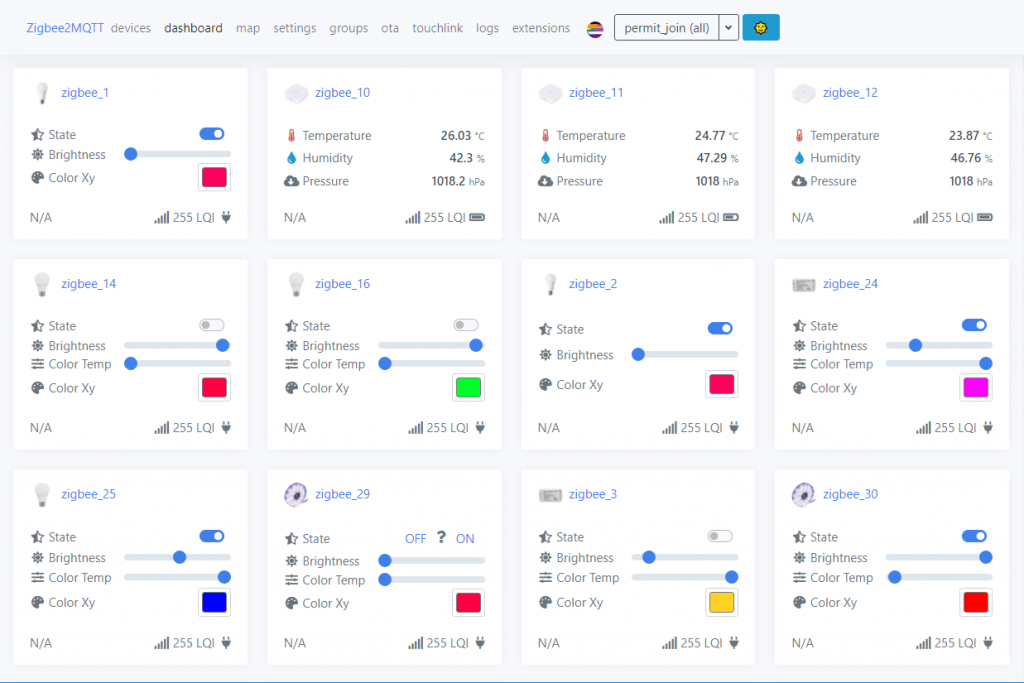
by whilenot-dev
5/26/2026 at 5:55:18 AM
With each manufacturer doing their own thing, you’re also dependent upon each company keeping their servers online for X years. And when they inevitably decide that this isn’t the market for them (eg Belkin Wemo), you’re stuck with switches or plugs that potentially don’t work at all. Smart home items should have lifespans on the order of decades. But companies treat the products as something that is obsolete after a year.by mbreese
5/26/2026 at 3:55:59 PM
> Smart home items should have lifespans on the order of decadesOr at least only trade away long term reliability when there are useful features being gained.
Eternally relevant rant about smart product solutioneering: https://m.youtube.com/watch?v=HcXu4_K1tMQ&t=45s
by ethbr1
5/26/2026 at 4:59:33 AM
Plus, their apps insist on advertising their other crap to you at every opportunity.Stop pestering me because you think I haven't given you enough money yet. Go away.
by vunuxodo
5/26/2026 at 5:06:20 AM
It also wants all three of wifi, Bluetooth, and location on, otherwise it provides a reminder that you have them switched off - even though it works just with wifi on.by BLKNSLVR
5/27/2026 at 8:15:44 AM
In a similar fashion Honda shows you an indismissible error on the dashboard when you turn off private data sharing, and even with premium subscription to their app they wouldn’t let you find your car’s location on a map until you enable precise location on your phone.by itopaloglu83
5/26/2026 at 6:59:10 PM
Location permission is the weird one. Well yes the WLAN network ties to location. But still why can't it be absolutely clearly separate from satellite positioning systems...by Ekaros
5/27/2026 at 1:09:53 AM
you can add _nomap to a wifi ssid and apple/google should ignore the ap for location.by m463
5/27/2026 at 4:47:00 AM
Why should I change my SSID? They're the ones who suck.by olyjohn
5/27/2026 at 9:27:51 PM
yeah, big tech rarely self-limits itself, but it's still nice to pass on the times when they do...by m463
5/26/2026 at 5:46:55 AM
I use Home Assistant (https://www.home-assistant.io/). It has an integration for lots of manufacturers. Single app, single entry point, cross manufacturer automations.by nfrankel
5/26/2026 at 5:57:32 AM
Home Assistant is well beyond the skills of the vast majority of people to install, set up, and maintain. And they don't want to have to maintain something like that. They want an appliance that they plug in and just works.by kelnos
5/26/2026 at 6:50:41 AM
Sure. Most people don't have much beneath-the-skin technical inclination at all. We see this right now in 3D printing: Bambu Labs printers are popular because they're simple to use: A person can unbox it, plug it in, load some filament, and start printing widgets from their pocket supercomputer basically immediately.But it is available as a plug-in appliance, and they're getting better and better at the Just Works aspects all the time.
And in a world where everything is relative, it's a hell of a lot easier to get started with Home Assistant than it is to get started with something like KNX or Crestron.
by ssl-3
5/27/2026 at 8:26:23 AM
It’s a balancing act and smart homes couldn’t become the next evolution of home technology.by itopaloglu83
5/27/2026 at 5:41:13 PM
It doesn't have to be universal or even vaguely popular in order to be successful.I have all kinds of widgets around me at home that are the products of successful companies of various sizes, and that are so niche that 95% of people would probably never seek to own such widgets themselves. Most probably aren't even aware that widgets like this exist in their universe. But the remaining 5%? They know about the widget, and they want one (maybe more than one).
There's ~149 million households in the US alone. 5% household penetration would require ~7.5 million widgets.
It sure is easy to imagine ways that a person and/or a company can sell just 7.5 million widgets and ultimately be financially unsuccessful, but it's also easy to imagine ways in which that would work out just fine.
But that's just meandering digression. :)
The Open Home Foundation had revenue of CHF 8,836,394 and expenses of of CHF 7,352,798 in FY 2025[1].
Is that small potatoes in a world with trillion-dollar companies? Yeah, it's certainly not ginormous. Is that successful? I personally think that it is.
by ssl-3
5/27/2026 at 2:09:41 AM
I have the skills to run HA, and I despise the fact I must use it for any reasonable multi-vendor ecosystem.I'd much rather have an open version of Apple Home or whatnot, even if I paid for it. I really don't want to spend a bunch of time dicking around with home automation - I want it to simply do what I want it to do.
by phil21
5/26/2026 at 6:11:17 AM
Matter is a solution to that. It's a standard pathway for things to talk to (say) a light bulb. The control interface is local, not cloud-based. And configuring a Matter device from $random_company doesn't require $random_company's bizarro-world app; instead, it involves a QR code or a short alphanumeric sequence.That Matter light bulb still needs something to control it, but the light bulb is not tied to one control ecosystem -- at all. It works with any Matter-supporting system.
That bulb can even work multiple different Matter systems concurrently. Which sounds dumb, but that helps smooth our transition periods wherein a person switches from one system to another. The old system can continue to operate just fine while the new system is implemented, and then once the new hotness is behaving Good Enough the old one can just be switched off.
by ssl-3
5/26/2026 at 7:12:59 AM
It's also a bit of a trap. Many devices "work with Matter" but either they don't really until a future firmware update, and even then, a lot of them have certain features locked into the vendor app.There's also complications around networking. Matter over WiFi works great if your networking gear can withstand potentially hundreds of devices connected. Matter over Thread seem to work under specific conditions, but I still haven't been able to pair the first device.
There's also potential issues around device certification.
All in all, Zigbee is a more reliable platform for the moment IMO, even though I have some issues with it as well.
by cassianoleal
5/26/2026 at 8:34:40 AM
I've heard of these "works with Matter"-but-not-without-help devices, but haven't encountered one yet. I just take random cheap Matter devices out of the box, scan the QR code with HA, power them up, and they work.I get all of the features I think I'd want out of something like a light bulb or a wall switch that just responds to commands and reports status. :)
None of my stuff uses Thread yet. I'm cheap, so I tend to buy home automation gear at the very low end of the market and Thread just isn't quite there yet.
Anyway, Zigbee.
I was using Zigbee when that still mostly bare dev and demo boards, >20 years ago. It was neat then (I was using it to consolidate RS-485 serial comms between a bunch of gear mounted on different radio towers), and it's still neat today.
But in home automation, Zigbee has been problematic for me, with devices going offline and coming back according to some unseen agenda. I've gathered that "right way" to fix that is apparently to use repeater-capable devices here or there, but meh: I'd rather build a proper wifi network (with hardwired access points) than buy weird stuff I don't need, put it in places where it isn't otherwise useful, and let Zigbee form its own unsteered mesh.
It just makes more sense to me to build a single wireless network, than to build multiple wireless networks. So I built a proper-enough wifi network with some Mikrotik hardware and that's what I use.
But I still have one Zigbee device (a temperature sensor) and it's been working fine for years. I don't track the rate at which it eats coin cells as well as I could, but I probably get a little over a year out of a random Chinese cell and they don't cost much.
In terms of wireless bandwidth: I find it only sensible at this point to consider 2.4ghz to be trash. It's not worth preserving. Internet speeds (and needs) keep increasing, and that means that 2.4ghz decreases in relative usefulness for work that requires high speed data. And all of my serious devices have 5ghz radios, anyway, and have had them for a long time.
Its biggest strength is also its biggest limitation: Penetration through walls tends to be better, and that means that the band gets stuffed up with noise from the neighbors more than 5ghz does.
It seems OK to make phone calls using a Bluetooth headset at short ranges, though. And it's plenty good-enough to tell a light bulb to turn on or off, run a music streamer, or play with esp32 and pi pico projects.
So even though many others seem to despise the concept: I'm quite deliberately centered on using 2.4ghz wifi for home automation stuff. It works well. I think I reached this position rationally. :)
by ssl-3
5/26/2026 at 10:06:30 AM
I hear you!Interestingly enough, I agree that cheap Matter over WiFi devices work well. I have a bunch of Moes lightbulbs and they worked out of the box, except one that seems to lose its connection after a few minutes of pairing - still pretty good out of about 30, each costing £3-4.
The bigger brands are the worst offenders - SwitchBot, Meross and Tapo are all problematic to an extent.
I'm also just building a solid WiFi network for these devices. If nothing else, I can troubleshoot WiFi a lot more easily than either Thread or Zigbee.
by cassianoleal
5/27/2026 at 3:17:25 AM
> The control interface is local, not cloud-basedUnfortunately you see quite a few manufacturers implement Matter in a way where they require a proprietary hub, and the proprietary hub requires a constant internet connection to work...
by milch
5/27/2026 at 5:48:26 AM
> Unfortunately you see quite a few manufacturers implement Matter in a way where they require a proprietary hub, and the proprietary hub requires a constant internet connection to work...In what way?
I don't see any of them that require these things.
If you do see them yourself, then please use the space provided by clicking the "Reply" button to name-and-shame. Please be specific; I need this information in my life.
by ssl-3
5/27/2026 at 4:01:25 PM
SwitchBot is one of those major manufacturers: https://www.reddit.com/r/TrySwitchBot/comments/1j8ogt8/matte...by milch
5/27/2026 at 6:03:08 PM
Thanks.If I'm looking at that right. it looks like Switchbot sells a device that talks Matter on one end, and emits infrared commands on the other end.
And that it needs continuous Internet access in order to perform this infrared function because it doesn't store those infrared codes locally -- like, apparently, not at all.
Every programmable remote for the past 30+ years has managed to do this with the most basic of hardware, but a company with the technological prowess of Switchbot just can't quite get that functionality into their workhorse ESP32.
That's hilarious. 10/10. I needed that today.
I'll try to remember to amend my future comments about Matter's real-world offline utility with "Unless they're the product of a resolute fuckup, like Switchbot."
by ssl-3
5/27/2026 at 11:34:24 AM
The arrogance is similar to manufacturers of EV chargers who went above and beyond to not add normal Debit/Credit card reader and instead insisted on applications in a phone.by general1465
5/26/2026 at 6:55:22 PM
> every single manufacturer that wants you to install their app and use their ecosystemThat's good. I don't want a single company to control everything in my house. Having multiple vendors with different implementations is healthy for the industry.
The real problem is there's nothing "smart" about those "smart home devices" to begin with. They are just remotely controlled devices. Technically, someone or something still has to control them because these devices can't really make decisions on their own. And then, to make those decisions remotely (either in the cloud or in a home local controller), every home installation needs to be highly customized. There are several light switches in my house that I never need to touch -- their states are automatically shifted based on like ~15 conditions: time of day, light conditions, occupancy, human activities(iOS focus modes). Non technical people can't do that.
I would want those devices to make simple decisions on their own (I have a few "dumb" light switches with motion+light sensors and they are pretty good already), and for complex decisions, they expose some APIs for other devices/controllers to call. Matter seems to be the right direction, but it is still controlled by a handful powerful players.
by zzyzxd
5/27/2026 at 11:35:58 AM
> That's good. I don't want a single company to control everything in my house. Having multiple vendors with different implementations is healthy for the industry.Imagine that every vendor would have different implementation of TCP/IP stack.
by general1465
5/27/2026 at 12:54:28 AM
the business does not make money unless they sell your data. open software/hardware need to be treated as public goods like utilities. thats the only way to keep monopolies out and provide the fertile ground for competion.by cyanydeez
5/26/2026 at 6:00:13 AM
My current strategy is to buy only Z-Wave gear. I run my own home automation software on a Raspberry Pi, but someone (i.e. nearly everyone) who wouldn't want to do that could (in theory!) buy a Z-Wave hub appliance, install its companion app, and it should be pretty easy to deal with that way.But this seems not to be a well-advertised way of doing things, unfortunately.
by kelnos
5/26/2026 at 2:22:18 PM
> with no guarantees of interoperability.Not only that, but within a few years they all stop functioning and now all you have is a collection of expensive paper weights.
The greed of the manufacturers made "smart home" a predictably dumb proposition.
by zombot
5/26/2026 at 8:14:03 AM
The worst part of this is half of these are the same white labelled tuya devices that can simply bind to each other's apps or the original tuya app..And half of them completely disable local network access... Like why?!
by saidinesh5
5/27/2026 at 8:29:59 AM
Cooypasta. They all just want to copy a firmware and ship the device with as low cost as possible and also keep you in their system for you to keep coming for more.Matter is all fine but try making a matter device as a hobbyist, you quickly realize how it was designed for large companies and people simply choosing simpler solutions that they can copy and paste practically.
by itopaloglu83