3/21/2026 at 5:37:29 AM
In DevOps (and Lean, TPS) the more advanced form of this is the Poka-Yoke (https://en.wikipedia.org/wiki/Poka-yoke). Poka-yokes don't just add safety, they also guide the human away from making a mistake.The canonical example is the automatic shift knob in a car. The shift knob is designed to 1) prevent you from accidentally shifting all the way back into reverse without pressing the shift button, and 2) prevents you from leaving park or neutral without depressing the brake pedal. This way you don't damage the drivetrain or accidentally cause the car to roll forward/backward.
Poka-yoke is a form of defensive design (https://en.wikipedia.org/wiki/Defensive_design). For a beautiful example of defensive design, see the average electric kettle. If water boils over the top it won't short the device, if it boils dry it'll stop operating, the handle and body are plastic to prevent burning yourself, the handle is ergonomic to make carrying 1.5L of sloshing boiling water not cause you to spill it, the cord is detached from the kettle so you don't yank the cord and spill the boiling water, the switches are located on the bottom away from hot steam, and the lids usually lock while in operation, again to prevent damage from spillage or steam. It's the simplest and safest possible way to boil water, and it's $20.
by 0xbadcafebee
3/21/2026 at 2:50:11 PM
The example that comes to my mind is lockout tags. [0] It usually means temporarily jamming up a specific control marked as the lockout/ignition/energizing control while you're working on some big and gnarly machine. There's a bunch of regulation around the specifics of what that control has to prevent if not activated/lockedout, but usually it's a dirt-simple breaker switch or hydraulic valve, controlling whatever the main source of energy into the machine is. The ones with holes are for padlocks that everyone will lock padlocks onto so you have a count of who's still "down there".If you ever URGENTLY needed to start a machine, and you knew it was safe to do so, the average shop gremlin could always break the tag and start it since they're normally made of craptacular plastic or thin sheet metal... but it's easily enough friction to make you rethink what you're doing. Never known anyone that's ever had to break a tag like that.
by graypegg
3/21/2026 at 3:43:53 PM
[dead]by aaron695
3/21/2026 at 12:47:21 PM
My favorite example of poka-yoke is when the pieces and hardware in build-it-yourself furniture kits won't fit anywhere except the correct places: two screws only have the same width if they're interchangeable, wood bars refuse to go in unless facing the right direction, etc.by vharuck
3/21/2026 at 8:30:17 PM
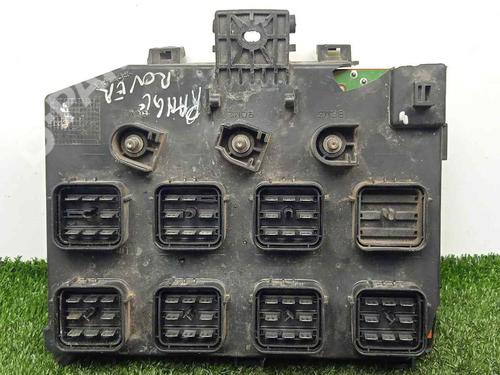
There's a great example I found a while back when I replaced the fuse box in one of my Range Rovers.It has seven plugs (there's space for eight) each of which have space for eight pins. The plugs are identical - almost. They're different colours, and they have a T- or U-shaped pin that fits into a hole in the appropriate flying socket on the engine bay wiring harness. The pins are rotated for each plug. [1]
There's no way to fit the fusebox the wrong way round in the engine bay because it has three mounting holes with odd spacings, and one has an angled slot for a bracket that holds a coolant pipe which definitely wouldn't fit if it was wrong.
There's no way to fit the sockets in wrong even without the pegs because the wiring harness only allows them to line up with the correct plugs.
Even the three high-current screw terminals that feed the body ECU under the driver's seat have got little lugs sticking out so you can't mix them up, although since they're all unswitched feeds fused at 60A it kind of doesn't matter.
There are a lot of nice little bits of design like that. Shame they didn't extend that to the ignition coil connectors on later V8s, which are the same for both pairs of coil packs. See if you can guess what causes a lot of "crank, no start" faults when people have been in at the back of the engine.
[1] https://bparts-eu.s3-eu-west-1.amazonaws.com/images/62538/bi...
by ErroneousBosh
3/21/2026 at 9:05:49 PM
Funny you say that. As I was using it at a hotel, I was just reflecting on how poorly designed the average kettle is, with the stationary handle on the top and a spout guard: https://stock.adobe.com/video/hot-cup-tea-kettle/189747353Once the water is boiled, you flip the guard, and get your first scalding. Pour the water and get a nice splash of steam due to the fixed position of the handle as it rises up past your hand. And refilling the kettle is yet another opportunity to get scalded, as the handle gets in the way of your efforts to remove the lid.
by esafak
3/21/2026 at 9:43:10 PM
Electric kettles are much better designed, and are what the parent comment is talking about. This [0] is the canonical white-labeled kettle that you can have for 30 of your hard-earned canukistanian kopeks, and are the average kettle around here. No scalding since the lid's handles are deep enough that you can open it on an angle to direct the steam away from you. Big handle on the side instead of the top. Switch on the bottom away from hot metal casing. And the kettle just lifts off the base, so you're not futzing around with a cable while pouring hot water.No idea why these aren't common everywhere.
[0] https://www.canadiantire.ca/en/pdp/black-decker-cordless-ele...
by graypegg
3/21/2026 at 10:46:29 PM
Thats certainly an iconic kettle look, but I'm not sure I'd call it the average kettle. I don't think ive ever seen someone actually use a kettle like that. Maybe many decades ago.by xboxnolifes
3/22/2026 at 11:37:13 AM
I use one much like this four or five times a day, and have none of the problems described. I fill it through the spout though, so never have to remove the lid.by EdwardCoffin
