2/23/2026 at 1:36:21 PM
As someone who works in commercial fleet fuel economy (powertrain, not aero, but you keep an eye on the whole stack since technologies compound), it's worth noting how far the industry has moved since the 1970s NASA Dryden work.The sheer amount of "snake oil" bolt-on products sold to fleets in the 90s and 00s means the industry now demands rigorous third-party validation. The best open source testing I've seen comes from Mesilla Valley Transportation Services (https://www.m-v-t-s.com/certified-technologies/). They don't rely on ECM dashboard readouts or pump receipts. They run a control truck and test truck simultaneously on a track or controlled highway loop so weather, air density, and wind are identical. Anemometers on the trucks algorithmically factor out wind speed/direction, tyre temp, and weight. Tests are designed to answer the actual question rather than tick a standard's boxes. Their chief test engineer was ex NASCAR, IndyCar and F1.
My team actually tested a dual-fuel system with MVTS. The engineering was sound, testing proved a slight thermal efficiency improvement, but cheap US diesel versus the cost of the alternative fuel meant the ROI was non-existent. The physics worked, the math killed the project. (The economics work in Europe, thankfully.)
A lot of what's being discussed in this thread is already standard too. Mirrorless cabs are more the rule than the exception now (as pjc50 linked above), close-coupled trailers with gap fairings, wheel covers, under-trailer aero, all commonplace. A couple of current ones worth knowing about: the Scanias with the "Super" powertrain run a really aggressive overdrive at around 900rpm at the 90km/h (56mph)EU limit, where a conventional truck sits around 1200rpm. Requires huge low-end torque but claims 5-8%. The Mercedes Actros L claims 3% from its slippery front end alone. It is absolutely hideous though, so make of that trade-off what you will.
The biggest factor though is driver variability. All the aero and powertrain hardware in the world doesn't matter if the driver thinks they are the stig. The biggest shift in the last decade has been removing human inconsistency from fuel economy entirely.
Automated Manual Transmissions are now completely dominant in modern fleets. They shift perfectly for fuel efficiency every single time, totally capping the penalty of a bad driver. Layer on top of that Predictive Cruise Control. Modern trucks use GPS and 3D topographical maps to "see" miles ahead. The truck's computer knows exactly when to back off the throttle before cresting a hill to coast over the top, and exactly how much momentum to carry into the next dip. A human driver relying on their eyes simply cannot compete with a powertrain that knows the exact gradient of the road three miles ahead.
by mikeayles
2/23/2026 at 1:52:57 PM
Thanks for the informative post. In America, I frequently see/hear the diesel engines idling all night at rest/truck stops. Smart cruise control that coasts perfectly over the top of a hill sounds great, but if the driver leaves his engine idling for 8 hours so he has ac… feels like that matters more, no? Has there been any sort of push for batteries or solar to power the sleeper cab amenities instead of running that engine while not driving?by niwtsol
2/23/2026 at 2:53:55 PM
Although this has dropped off the FP now, I wanted to finish my response, but wanted to follow up with some data:https://www.mikeayles.com/torque-rpm-time.png
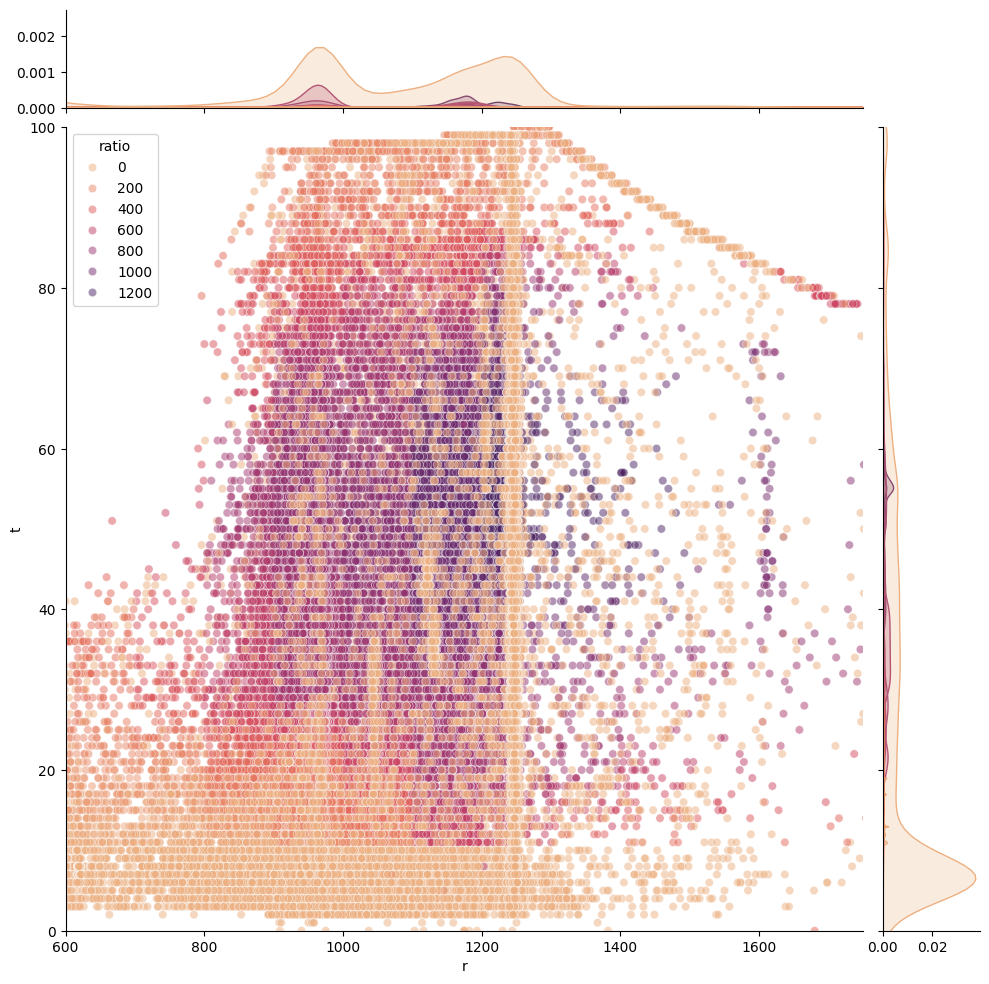
So, here is approximately a weeks worth of data (around 700l of diesel), looking at the histogram on the right hand side, theres an awful lot of time spent at 0-10% this is around 60% of the trucks time.
https://www.mikeayles.com/torque-rpm-volume.png

However, when you multiply the time by the fuel consumption within that same time period, you get a volumetric chart, where we can see that 60% of the time, accounts for only 2% of the fuel use.
So, for idling, whilst it's noisy, produces CO2, a 5% improvement at highway speed will get you so much more of a fuel and co2 saving than eliminating idle. although, both, do both.
by mikeayles
2/23/2026 at 7:59:32 PM
Roger that - thanks for the OC graphs. In the first chart, the sloping cluster of data points, is that just the max torque output of the engine then? And the vertical clusters at ~950, ~1050, and ~1110 - can we assume those are some sort of cruise control or gearing outcome?Also, your 28.5M+ miles driven is such a great stat - thanks for sharing this knowledge!
by niwtsol
2/23/2026 at 9:29:28 PM
Correct, the engines will have a peak reported torque at one particular RPM, usually quite low (maybe 900RPM off the top of my head), at higher RPM, the peak torque may only be 90% of the peak torque, but at 50% more RPM, you end up with (100 * 0.9 * 1.5)=35% more 'power' despite the torque being lower.This is detailed in J1939 (canbus protocol) PGN (parameter group number) EC1 (engine configuration 1) if you fancy a rabbit hole.
The vertical clusters will be a combination of gearing and cruise control, exactly. At the vehicle speed limit in the top gear (usually 12) most trucks will cruise around 1200rpm (exception being the scanias with supercruise). It's likely this truck did a lot of urban driving or was in average speed zones.
You also get a lot of drivers (suprisingly more younger than older drivers) that are happy to set it at 53mph, get the green tick for the telemetry to try and get a bonus, but then have a really low stress drive. It creates a bigger speed differential so they can be overtaken by other trucks easier, and realistically results in 10-20mins over a 10hr shift, to some, a 10hr chilled out shift is better than 9hr40mins of pushing it.
by mikeayles
2/23/2026 at 5:56:10 PM
What are the axes on the chart? Rpm?by jfim
2/23/2026 at 6:09:41 PM
Correct, RPM and Torque (%)edit: images may be down for 5mins, migrating my blog to astro.
by mikeayles
2/23/2026 at 2:13:39 PM
A lot of the time, the idling you may hear next to a truck that's parked up on break may actually be a refrigeration unit. Most fleets have telematics that would give a driver a red flag if they idled excessively, a lot of trucks even turn themselves off (although it's easy to bypass).On the market, there's battery electric APU's that drive AC units, like: https://voltaair.com/product/iq-no-idle-ac-unit-for-trucks/#...
But unless they are mandated, an idling truck uses <1 litre per hour, assuming AC over summer months only (as they will have a webasto style diesel heater for the winter), results in about $1,000 per year in idle fuel. Assuming a fleet has their vehicles on a 3 year rotation, the APU needs to be $3k or less, with zero failures for it to be economically worthwhile. (additionally, the charge for those batteries needs to come from somewhere, you can do retarder/brake enabled alternator charging which would help though).
So unless mandated by carbon emissions targets, the lower risk option is just to burn diesel.
However, at around 1k litres per year, that's around 2.5tonnes of CO2, so if cost isn't a lever that can be pulled to change this behaviour, CO2 may be.
by mikeayles
2/23/2026 at 2:30:19 PM
Many trucks have auxiliary power units (APUs) -- essentially small generators -- to power the AC and other house loads at rest stops. Some states have anti-idling laws.by javiramos
